
CNC services play a crucial role in manufacturing industries that demand the highest levels of precision and reliability. Among these industries, aerospace, medical, and automotive sectors stand out as areas where unmatched tolerances are not just desirable but absolutely essential. The stringent requirements in these fields stem from the critical nature of the components involved, where even minute deviations can lead to significant consequences. CNC machining, with its advanced computer-controlled technology, offers unparalleled accuracy that ensures components are produced to exact specifications consistently. In aerospace manufacturing, precision is paramount. Aircraft parts must withstand extreme stresses, temperature variations, and safety regulations that leave no margin for error. CNC machining enables manufacturers to create complex geometries with tight tolerances, ensuring that every piece fits perfectly within the assembly. The high repeatability of CNC processes minimizes variability, which is vital for maintaining the integrity and safety of the final product. Components such as turbine blades, engine mounts, and structural frames benefit from CNC’s ability to deliver flawless detail and surface finishes, which are essential for optimal aerodynamic performance and durability.
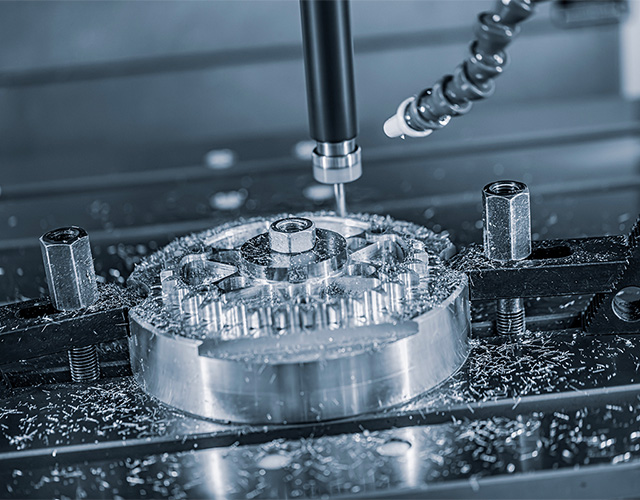
Similarly, the medical industry relies heavily on cnc vs manual machining services for the production of surgical instruments, implants, and diagnostic equipment. The demand for precision in medical components cannot be overstated, as these parts must often interact directly with human tissue or be implanted within the body. CNC machining allows manufacturers to meet these demands by producing parts with micron-level accuracy and consistent quality. This level of detail ensures that implants, such as joint replacements or dental fixtures, perform reliably over extended periods without causing adverse reactions. Additionally, the capability to machine biocompatible materials with exacting standards helps drive innovation in medical technology, supporting better patient outcomes. In the automotive sector, CNC services contribute significantly to the production of engines, transmission systems, and safety-critical components. The push for higher efficiency, lower emissions, and improved safety standards has driven manufacturers to rely on CNC machining for parts that require precise fit and finish. Components such as cylinder heads, gears, and brake parts must adhere to stringent dimensional requirements to function properly under dynamic conditions.
Furthermore, CNC technology facilitates rapid prototyping and customization, allowing automakers to innovate and adapt to changing market demands quickly. The unmatched tolerances achievable through CNC services are made possible by several factors, including advanced software, high-quality cutting tools, and rigorous quality control processes. Computer-aided design CAD and computer-aided manufacturing CAM software enable precise programming of machining operations, allowing for complex parts to be produced with minimal manual intervention. High-precision cutting tools and machines maintain tight control over dimensions, often to within microns. Coupled with in-process monitoring and post-production inspection techniques such as coordinate measuring machines CMM, manufacturers can verify that each component meets exact specifications before it is delivered. Moreover, Uneed CNC machining offers flexibility and scalability that traditional manufacturing methods struggle to match. Whether producing a small batch of specialized aerospace components or mass-manufacturing automotive parts, CNC services provide consistent quality without sacrificing efficiency.